


Silk Shawl vs. Pashmina: What's the Difference?
Shoppers use "silk shawl" and "pashmina" almost interchangeably — and to be fair, both are elegant rectangles of fabric you drape over your shoulders. But they're different materials with different strengths, and choosing the right one comes down to when and how you'll wear it. Having designed both with our artisan partners in India since 2001, here's the honest breakdown.
The short answer
A silk shawl is woven from silk — lightweight, smooth, with a natural sheen that catches light. It's the warm-weather and evening choice. A pashmina traditionally refers to a shawl woven from fine cashmere (the word comes from pashm, the Persian term for the soft undercoat of Himalayan goats), though today the word is often used loosely for any soft wrap. A true cashmere pashmina is matte, plush, and genuinely warm — the cold-weather choice.
Feel and look
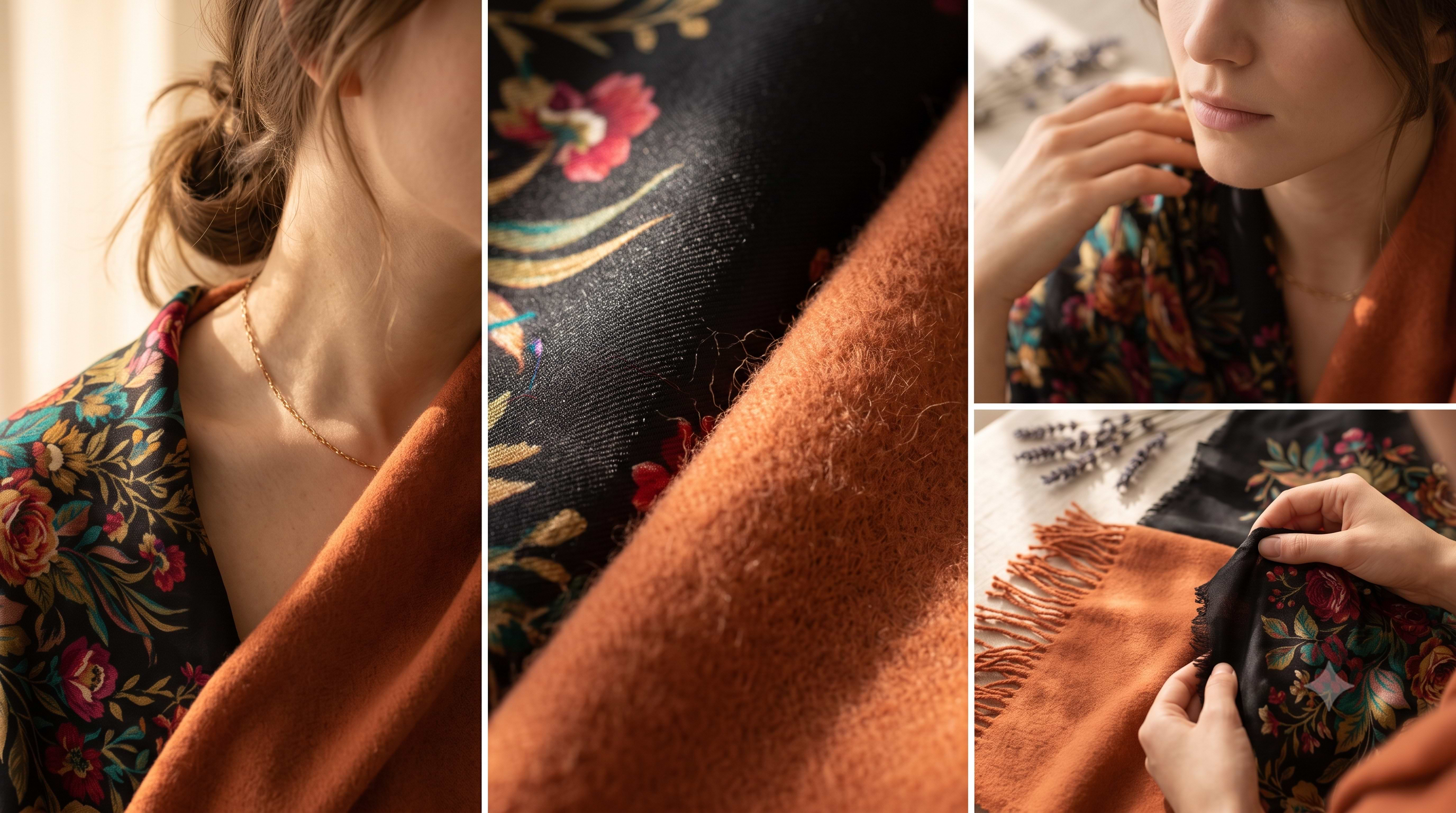
Run your hand over each and you'll never confuse them again. Silk feels cool and slick to the touch, drapes close to the body, and has a luminous surface that photographs beautifully — one reason silk wraps are a wedding-guest staple. Cashmere pashmina feels warm the instant it touches your skin, with a soft, brushed surface and a fuller drape that adds gentle volume around the shoulders.
Warmth and weather
This is the practical dividing line. Silk breathes and weighs almost nothing, so a silk shawl adds color and coverage without heat — ideal from late spring through early fall, or year-round in warm climates. Pashmina insulates remarkably well for its weight, which makes it the wrap you want for an outdoor evening event in October, a chilly ceremony venue, or winter travel. Many of our customers own one of each and switch by season.
Which one for a wedding?
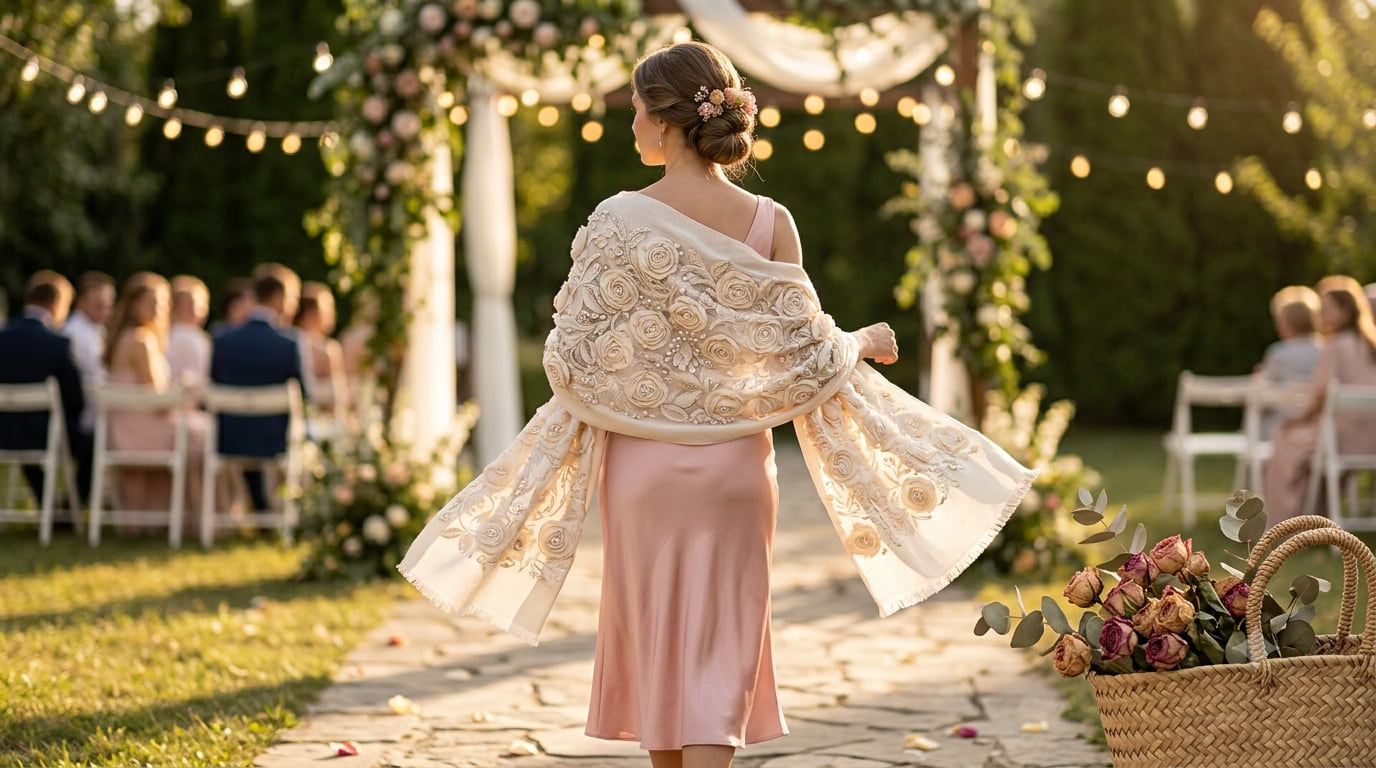
For a summer or destination wedding, choose silk: it stays comfortable through an outdoor ceremony, dresses up a sleeveless gown, and folds small enough for any clutch or evening bag. For fall and winter weddings — especially ceremonies in older venues that run cold — a pashmina keeps you warm through the vows without hiding your outfit under a coat. In both cases, pick a shade that contrasts softly with your dress rather than matching it exactly; the wrap should read as a deliberate accessory, not a missing sleeve.
Care differences
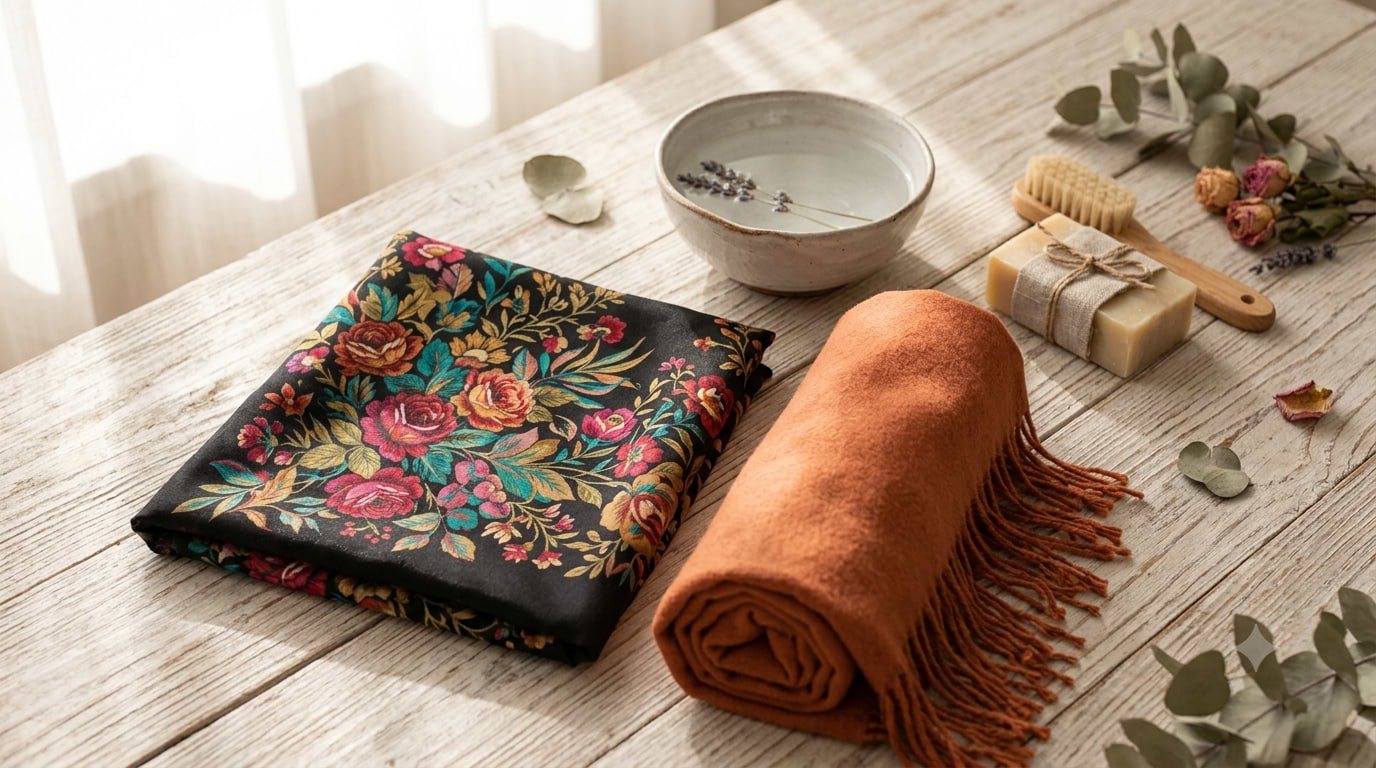
Both want gentle treatment, but for different reasons. Silk dislikes heat and twisting: cool hand wash or dry clean, dry flat, and press on the reverse with a cool iron. Cashmere pashmina dislikes friction and hanging: hand wash cold with a wool-safe soap, never wring, dry flat, and store folded (hanging stretches it). Treated well, either will outlast most of the clothes you pair it with.
A note on "silk pashmina" blends
You'll also see cashmere-silk blends sold as silk pashminas — usually around 70% cashmere and 30% silk. The silk adds sheen and drape to cashmere's softness, landing between the two fabrics in both warmth and weight. If you want one wrap that can plausibly do everything, a blend is the compromise pick.
Explore both at SAACHI
Our silk scarves and shawls carry the hand-finished prints our artisan partners are known for, and our wider scarves and wraps collection includes cashmere, wool, and our signature reversible scarves for the colder months. Whichever you choose, you're taking home a technique that's been practiced for generations.


Leave a comment